
Whoa! Here’s the thing. For people juggling Ethereum, BSC, Polygon and a half-dozen layer-2s, wallets can get messy fast. My instinct said everybody would just keep using the same old extension, but then I started looking closer at UX, permission hygiene, and how gas estimates really behave across chains—and somethin’ felt off about the usual options. Initially I thought more features alone would solve it, but then I realized security ergonomics and multi-chain clarity matter more than a laundry list of integrations.
Really? Yes. There are wallets that brag about multisig, hardware support, or fancy dApp browsers while quietly making it hard to see which network you’re signing for. This creates risk—users sign TXs thinking they’re on Mainnet when they’re not. Okay, so check this out—Rabby takes a different approach to the browser-extension wallet experience. It focuses on clear chain context, safer transaction handling, and intuitive account separation without acting like a Swiss Army knife that hides the blade.
Whoa! Short note: I won’t promise miracles. I’m biased toward wallets that show you the full TX details before you hit confirm, and Rabby does that in a tidy way that reduces accidental approvals. On one hand, some power users like raw JSON; on the other hand, most people need clean summaries and guardrails, though actually wait—let me rephrase that: good summaries with an escape hatch to the raw data are the sweet spot.
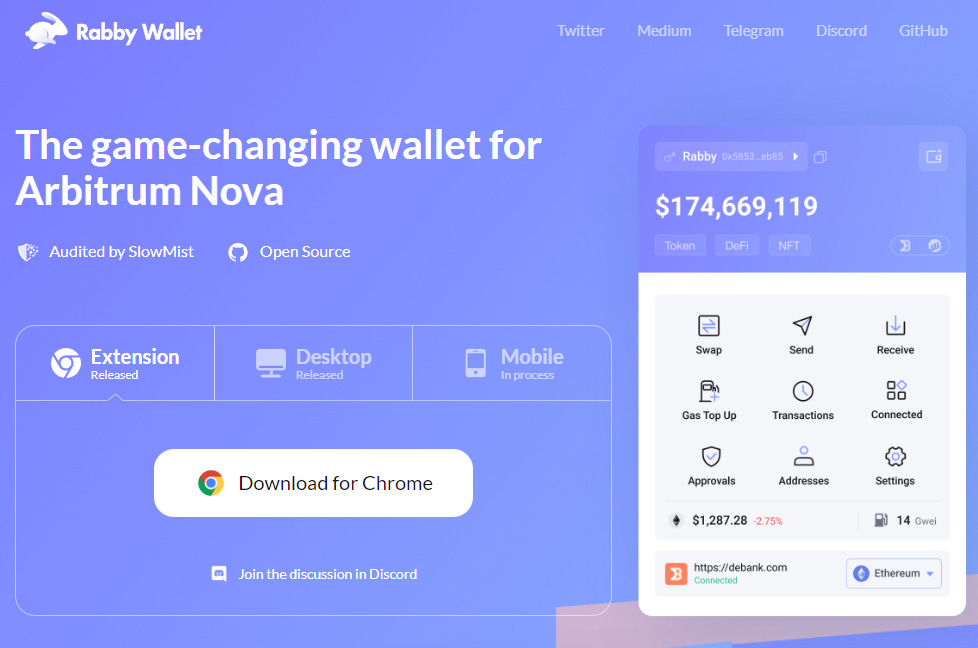
Hmm… short answer: clarity and control. Wallets should make it obvious which chain you’re interacting with, what fees will look like on that chain, and what permissions you’re granting to a contract. Medium answer: they should also offer gas control, token visibility per chain, hardware wallet bridging, and ways to isolate risky activities (like a burner account). Longer thought: when you layer in account management features, per-dApp settings, and an audit trail for approvals, the wallet becomes not just an entry point to DeFi but an active risk-reduction tool, because user behavior is often the weakest link in security.
Seriously? Yes. Rabby approaches this by separating account contexts and surfacing contract calls in a clearer format, which helps reduce misclicks and accidental approvals. The extension shows chain labels and estimated fee breakdowns next to each action so you’re less likely to be surprised. It also provides per-site permission histories, which is helpful when you want to revoke access without hunting through obscure menus.
Whoa! There’s also the speed of iteration to consider—wallet projects that update quickly to support L2s and new token standards help users move faster, but they need to pair those updates with strong QA. In the wild, users often push forwards without reading patch notes; a wallet that balances new chain support with conservatively designed UX is worth a lot.
Here’s what typically happens when someone adds a new DeFi protocol to their routine: they connect a wallet, grant approvals, and then forget about the approvals until something goes wrong. That pattern is very very common. Rabby nudges users to be more deliberate during that first connection and makes it easier to audit what’s been approved later. The wallet supports multiple chains in a way that reduces cross-chain confusion, and it has tools that show you pending approvals and gas estimates that are tailored to the selected layer.
On one hand, heavy DeFi traders want raw speed and fewer prompts; on the other hand, everyday users need guardrails. Rabby offers configurable prompts so you can dial the friction up or down depending on what you’re doing. This design philosophy acknowledges a tension: convenience vs. security—and it gives you practical knobs to adjust without sacrificing clarity.
Hmm… little caveat: not every dApp integrates the same way, and sometimes metadata provided by a dApp is sparse or misleading, which limits what any wallet can do. That’s not Rabby’s fault—it’s part of the ecosystem—but the wallet does try to compensate by giving you a more transparent view of the transaction payload so you can make better decisions.
Whoa! Short list first: permission manager, transaction preview (with decoded calls), hardware wallet support, and account isolation. Medium explanation: Rabby decodes contract calls so you see function names and arguments rather than obscure byte blobs, and it separates accounts so you can keep a “hot” account for small trade interactions while keeping savings in a different address. Longer thought: when you combine these features with a clear approval revocation UI and the ability to connect hardware wallets, the attack surface for social-engineering or accidental approvals shrinks significantly, though nothing is 100% foolproof.
Okay, so check this out—one of the things that bugs me about basic wallets is sloppy approval UX that defaults to unlimited allowances. Rabby highlights and helps manage token approvals, and that alone reduces long-term risk. (oh, and by the way…) You should still use hardware wallets for large stashes, but a well-designed extension like Rabby makes everyday interactions safer while remaining practical.
Rabby supports a broad range of EVM-compatible chains and layer-2s, which keeps your multi-chain activity in one place. That matters if you split assets across chains and want a consistent interface rather than juggling a separate extension for each network. Some folks in Silicon Valley and NYC prefer to keep a dedicated extension per chain, but for most people, one wallet that knows how to speak to multiple chains cleanly is a big productivity win.
Longer thought: integration quality matters more than the sheer number of supported chains, because routing, gas estimation, and nonce handling vary across networks—Rabby’s team focuses on making those core interactions predictable. Initially I thought expanding to every experimental chain would be highest priority, but seeing the mess when gas estimations break showed me it’s wiser to solidify the main ones first.
Really? Setting up a wallet isn’t rocket science, but a few steps matter. Back up your seed securely (paper or hardware store—don’t screenshot), create a separate account for riskier dApp play, and connect hardware wallets when holding serious funds. Somethin’ else: review approvals weekly and revoke what you don’t use anymore. It’s simple, and it helps avoid many common losses.
Here’s the thing: if you want to try Rabby, start small—link it to a small test wallet, use a familiar dApp, and pay attention to the transaction previews. If it suits your workflow, migrate more assets. If not, you’ll at least have learned what matters to you in a wallet UI.
I’ll be honest—no tool replaces vigilance. But a wallet that nudges you toward safer choices, shows clear transaction data, and lets you manage approvals without digging through six menus is a big help, and that’s exactly the usability niche Rabby aims for. If you want to download and explore it yourself, check out rabby wallet.
Yes. It supports common hardware wallets for signing, which is the recommended setup for significant holdings. Pairing a hardware wallet with the extension gives you convenience for everyday use while keeping private keys offline during signing.
Rabby surfaces approval details, decodes contract calls, and offers an approvals manager so you can revoke allowances. This helps reduce the typical “approve unlimited” risk that plagues many token users.
Yes. It supports multiple EVM-compatible chains and layer-2s, with chain-specific fee estimates and network labels to reduce confusion. Still, always double-check chain and gas settings before confirming complex transactions.

काठमाडौँ। अर्थमन्त्री डा. स्वर्णिम वाग्लेले ‘एनडि टिभी वर्ल्ड समिट २०२६’ मा सम्बोधन गर्ने भएका छन् । अन्तर्राष्ट्रिय अतिथि वक्ताका रुपमा उनी समिटमा सहभागी हुन...

काठमाडौँ। सत्तारूढ दल राष्ट्रिय स्वतन्त्र पार्टी (रास्वपा) का सभापति रवि लामिछानेले व्यक्तिगत तथा पार्टीका तर्फबाट देश तथा विदेशमा रहेका नेपालीलाई विजयादशमीको शुभकामना दिएका छन्। यसपटक...

काठमाडौं। प्रधानमन्त्री बालेन शाहले परिवर्तनका लागि सोचसँगै व्यवहार पनि बदल्न जरुरी रहेको बताएका छन्। विजया दशमीको अवसरमा शुभकामना दिँदै उनले आजको दिनलाई भगवान् रामले...

काठमाडौं। राष्ट्रपति रामचन्द्र पौडेलले बडादसैंका अवसरमा सोमबार काठमाडौं उपत्यकाका विभिन्न शक्तिपीठको दर्शन एवं पूजाअर्चना गरी टीकाप्रसाद ग्रहण गरेका छन्। उक्त अवसरमा राष्ट्रपति पौडेलले प्रथम महिला...
आकर्षक मिडिया प्रा. लि.
अनामनगर मच्छिगल्ली, काठमाडौं
सुचना तथा प्रसारण विभाग
१७८०/०७६-७७
ईमेल: nepalface21@gmail.com
सम्पर्क नम्बर : ०१-४१०२६८२
अध्यक्ष
माधव प्रसाद पौडेल
सम्पादक
राजुप्रसाद तिमल्सिना

© 2026 All right reserved to nepalface.com | Site By : SobizTrend